Protecting children is a shared responsibility.
Children move through a world adults build and manage. They enter our schools, churches, athletic programs, dance studios, youth organizations, childcare centers, medical offices, online spaces, and community programs. Along the way, parents entrust parts of their children’s lives to teachers, coaches, pastors, counselors, volunteers, administrators, and other adults with access, authority, and influence.
That trust carries an obligation.
Child protection is more than preventing one kind of abuse or watching for one kind of predator. It means creating environments where children are physically safe, emotionally secure, appropriately supervised, respected, heard, and protected from exploitation, abuse, neglect, coercion, violence, grooming, hazing, trafficking, and other forms of harm.
The institutions represented in the image above are different, but the principle is the same: when adults accept responsibility for children, they also accept a duty to protect them.
That requires more than policies written on paper. It requires strong safeguards, careful hiring and screening, appropriate boundaries, meaningful oversight, clear reporting procedures, transparency with families, and accountability when something goes wrong. It also requires adults who are willing to recognize warning signs, ask difficult questions, report what they see, and act when a child may be at risk.
The Circle of Trust
A child should not have to understand which adult has jurisdiction, which agency has authority, or which institution is responsible for acting. That is the adults' responsibility.
Parents should be able to trust that the people and institutions entrusted with their children will protect them and that when someone violates that trust, the systems surrounding the child will respond.
At Broken Trust, our work examines those systems: where safeguards work, where they fail, where accountability is missing, and what we can do to better protect children.
Because protecting children does not belong to one agency, one profession, one institution, or even one family.
It belongs to all of us entrusted with them.
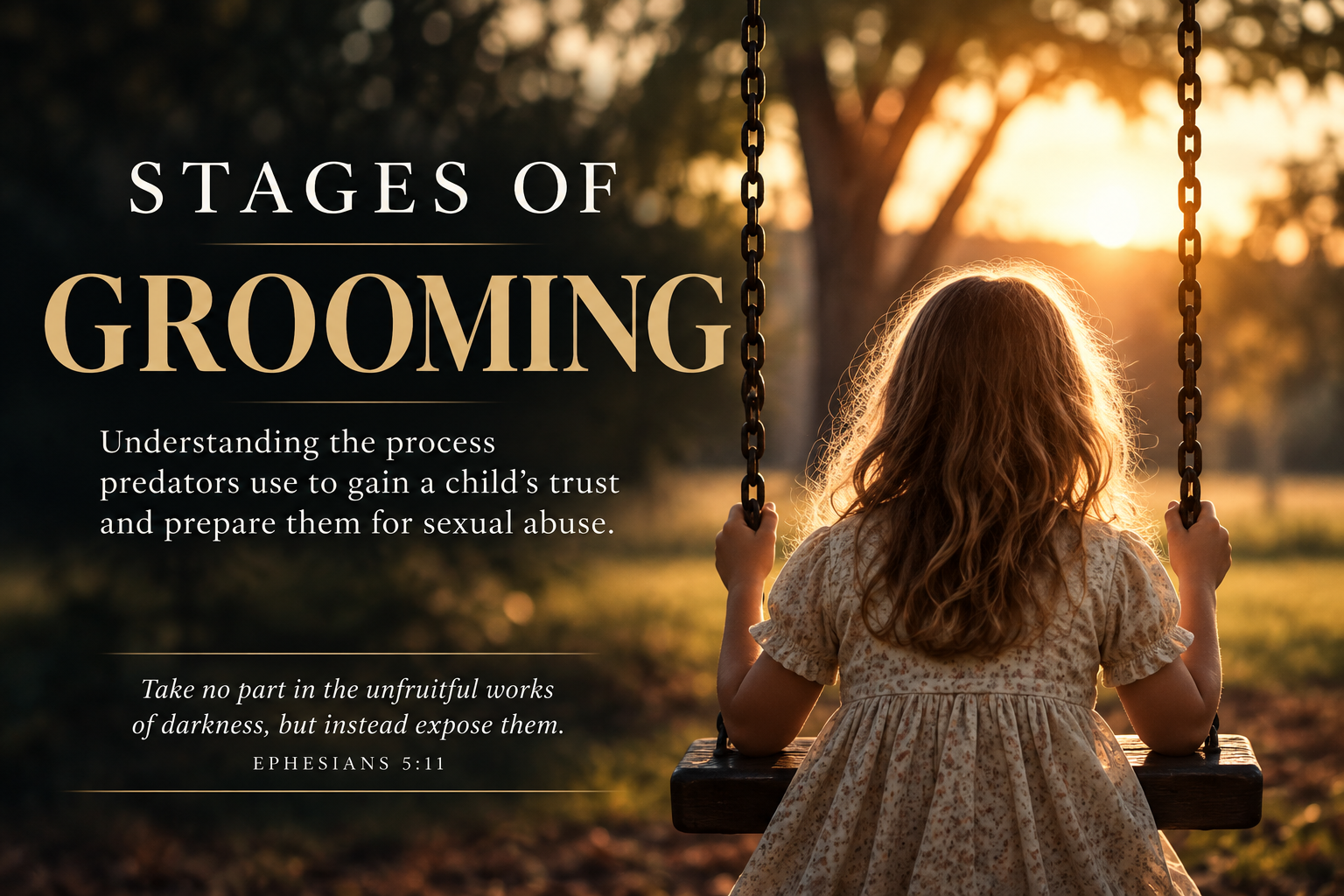
Grooming begins long before abuse. What may look like attention, kindness, or support can be part of a deliberate process of building trust, creating dependency, testing boundaries, and ultimately silencing a child. Understanding how grooming tactics work can help parents and trusted adults recognize the pattern, spot the warning signs, and interrupt the process before trust becomes a weapon.
Know the pattern.
Recognize the signs.
Protect the child.